Sales Leadership
Sales Management Lessons from Pep Guardiola
Discover how to apply sports management to sales with 11 sales management lessons from Pep Guardiola. Learn how to build a winning sales culture, refine processes, and lead high-performing teams using football leadership in business.
I am not a Manchester City fan. In fact, I'm a diehard Gooner. So I'm excited Pep has left. But...
Whether you loved his tactical dominance or grew tired of his teams controlling every single match, you cannot deny that the Pep Guardiola management style redefined modern leadership. From Barcelona to Bayern Munich and Manchester City, Pep didn't just win trophies; he set an entirely new standard for performance, preparation, and tactical execution. This approach became the gold standard for the Manchester City leadership framework.
One other Arsenal rival I was happy he retired was SAF because he was a dominant winner. When comparing Sir Alex Ferguson vs Pep Guardiola's leadership styles, Sir Alex showed us how to build a lasting empire through long-term vision and grit, while studying Pep Guardiola's leadership lessons taught us how to achieve elite, technical excellence in a fast-changing environment. When looking at what business leaders can learn from Pep Guardiola, the parallels remain striking, especially in the world of commercial growth.
Sports Management Applied to Sales
I’ve always believed that sales is the closest thing in business to team sports. Sales reps are the players on the pitch, and their leader is the manager on the touchline. In modern sales, where the "game plan" shifts every quarter and market competition is relentless, applying the principles of sports management applied to sales offers a clear blueprint for success. This intersection of football leadership in business shows us that elite performance is not accidental; it is engineered.
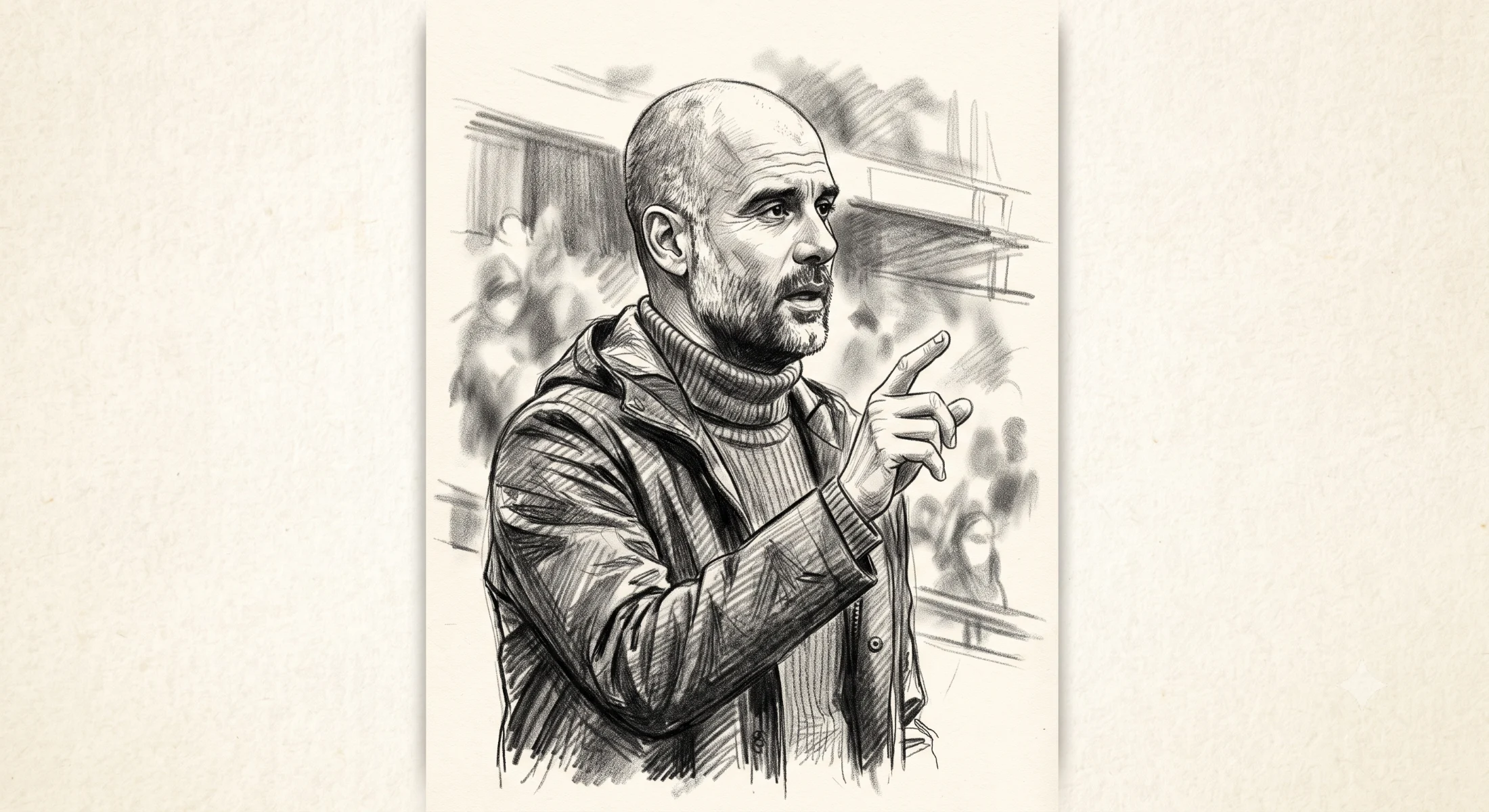
The Sales Management Lessons from Pep Guardiola
1. Structure gives freedom: Sales process vs. sales pitch
Pep didn't just tell his players to "go out and score." Instead, he built rigid tactical structures, such as his famous positional play in business (Juego de Posición), so players knew exactly where to be in every scenario. In sales, ultimate creativity and pitch freedom actually come after a rigorous, repeatable sales process vs. sales pitch framework is established. Structure provides the foundation that allows reps to execute with confidence.
2. Micro-actions dictate macro-outcomes
Guardiola was famous for obsessing over pitch positioning down to the millimetre. Great sales leaders realize that hitting revenue targets comes down to a relentless attention to micro-details, including the depth of discovery calls, precise CRM hygiene, and rigorous follow-up timing. High standards in sales strategy and execution naturally lead to predictable outcomes.
3. Continuous innovation prevents strategy fatigue
The moment competitors figured out Pep’s system, he mutated it. He would turn full-backs into central midfielders or play without a traditional striker. What worked in your go-to-market strategy innovation last year won't necessarily win next year. Leaders must constantly innovate their playbook before the market forces them to adapt.
4. Upgrade team standards, not just headcount
Pep demanded relentless personal improvement because good enough was never enough. In sales management, raising team performance isn't always about hiring more reps. Instead, it’s about continuously elevating the baseline standards, coaching, and skill levels of your existing team. This focus on continuous improvement in management is what separates elite teams from average ones.
5. High-performing individuals must fit the system
Pep famously moved on from world-class stars who didn't fit his high-pressing intensity or collective vision. A top-performing sales "lone wolf" who hits quota but destroys team morale, ignores processes, or hoards leads will ultimately break your organization. Alignment always beats rogue talent.
6. Control the tempo, control the outcome
Guardiola's teams dominated possession to control the flow of the game. In sales management, your team must control the buying process. This means dictating the decision timeline, qualifying economic buyers, and managing stakeholder expectations, rather than passively reacting to prospect requests.
7. Adaptability is required when the game plan breaks down
While Pep was a master planner, his best moments often came from subtle, in-game tactical shifts. A client pitch rarely goes exactly as planned, so sales reps need the situational awareness and flexibility to pivot mid-meeting when customer requirements shift.
8. Rest and recovery sustain high-intensity execution
Pressing high up the pitch for 90 minutes requires elite physical conditioning and smart squad rotation. You cannot expect a sales team to sprint through cold outreach and closing calls indefinitely without burning out. Sustainable energy management is vital to long-term sales team leadership.
9. Winning is a daily habit, not an end-of-quarter push
For Pep, success in May was built during double-session training in August. The process of building a winning sales team isn't finished during the frantic end-of-month rush. Instead, it is forged in daily pipeline reviews, tactical roleplays, and consistent activity week in and week out.
10. Data informs intuition, but conviction executes it
Pep relied heavily on performance analytics and video analysis, but his decisive choices came from clear leadership intuition. Data-driven sales leadership requires leveraging CRM metrics and conversation intelligence, but leaders must ultimately have the conviction to guide their people.
11. Intensity without empathy fails
Pep’s touchline energy was legendary, but his players repeatedly highlighted his genuine investment in making them better human beings and professionals. High targets and strict accountability only work when your sales reps know you are fighting in their corner. Talent management in sales starts with empathy.